

I STUDY ONE I
When AI Thinks for Us
What Happens to Our Thinking?
As AI tools become part of everyday decision-making, planning no longer starts from a blank page.
This project explores how different tools — thinking by ourselves, using Google, or using ChatGPT — change the way we think, feel, and create. By combining brainwave data (EEG), task outcomes, and user interviews, we look beyond efficiency to understand how tools shape cognitive effort, sense of control, and creativity.
How was the experiment conducted?
Participants were required to complete three time-limited planning tasks (20 minutes each), each involving the creation of a one-week meal and workout plan for different personas.


Participants
15 participants aged 21-35, all with basic knowledge of diet and exercise planning.
Tasks
Planning with self-reasoning only
Planning with Google search
Planning with ChatGPT assistance
Why Meal & Fitness Planning?
It requires both structured scheduling and creative personalization, making it ideal for observing how tools influence real-life planning and decision-making.
Findings
We analyzed the results through three complementary lenses, EEG brain activity, task performance, and post-task interviews. To understand not only what participants produced, but also how they experienced the process.
Who Works the Hardest?
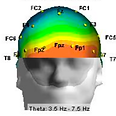
Google-assisted planning triggered the highest cognitive load, reflected in strong and widespread EEG activity. Participants had to constantly switch between searching, reading, comparing, and filtering information. Self-reasoning showed moderate but more focused mental effort, suggesting sustained internal planning and memory use. ChatGPT significantly reduced brain indicators of workload, indicating that much of the generative effort was offloaded to the system, and users shifted more toward reviewing and adjusting suggestions rather than creating from scratch.
Cognitive Load Bar

Low
Medium
High


Across brain data, performance, and interviews, one pattern consistently emerged:
AI reduces effort, but also reduces creative, engagement and sense of ownership.
Design Implications
Lower cognitive load does not automatically mean better experience.
When systems do too much, users may feel less involved and less creative.
UX & HCI
Future AI interfaces should support co-creation, not just automation.
Design should preserve human agency while offering intelligent assistance.
Possible directions:
Editable and modular AI suggestions
Transparent reasoning or source hints
Interfaces that encourage user reflection and revision
AI should not replace human thinking, but reshape how thinking is supported.
Designing for collaboration, not substitution, leads to more meaningful experiences.
PDF • Conference Paper • 59 pages
I STUDY TWO I
When Time Pressure Shapes Our Decisions
Online shopping often uses countdown timers and flash sales to create urgency.
These designs are meant to help users decide faster — but what do they do to our minds?
In this study, I explored how time pressure in e-commerce affects cognitive load, stress, and decision-making, using EEG and ECG to observe what happens not just on the screen, but inside the body and brain.
Rather than asking only what users choose, this research focuses on how it feels to choose under pressure.
Experiment Overview
Participants were asked to shop for two cosmetic products, foundation and lipstick
On a real e-commerce website under two different conditions:
Browsing freely without a countdown timer
Shopping in a flash-sale section with a visible countdown

Each task allowed 5 minutes per product. Throughout the session, participants wore:
EEG caps to measure brain activity (alpha & beta waves)
ECG sensors to track heart rate and heart rate variability (HRV)

We also collected short questionnaires before and after each task to understand
how stressed and confident participants felt about their decisions.
This mixed-method approach helped connect what users felt,
what their bodies showed, and how their brains responded.

Findings
A clear pattern emerged when time pressure was introduced.
Brain Activity (EEG)
In normal shopping, alpha waves were stronger, indicating a calmer and more focused mental state.


Under countdown timers, beta waves increased while alpha waves decreased — a sign of higher cognitive load and stress.


Prefrontal areas showed sustained activation, suggesting users were constantly evaluating and rushing to decide.
Physiological Response (ECG)
Heart rate increased more sharply during time-limited shopping.
HRV dropped, which is commonly associated with stress and reduced emotional regulation.

Subjective Experience
Interestingly, although participants reported higher stress, some also felt a sense of achievement after finishing within the time limit — a mix of pressure and reward.
Overall, urgency helped people decide faster, but it also pushed their bodies and brains into a more strained state.

Design Implications & Conclusion
Time pressure is a powerful design tool — but it comes with emotional and cognitive costs.
While countdown timers can increase engagement and speed up decisions, they also elevate stress and reduce the space for thoughtful comparison.
For UX designers, this suggests that urgency should be designed with care, not maximized by default.
Possible design directions include:
-
Softer or flexible countdown timers instead of hard deadlines
-
Clear visual hierarchy to reduce scanning effort
-
Highlighting key product information to support faster understanding
-
Designing urgency that motivates, without overwhelming